
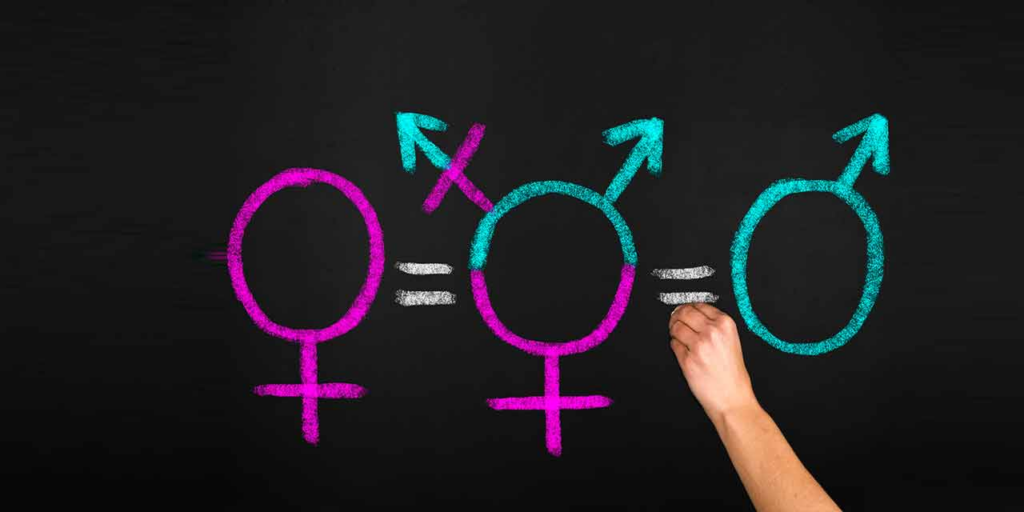
Recently, I was involved in a discussion on the rising number of third-gender people and sexual liberty in India. Pride marches are being organised in various cities across India. People are claiming their gender rights and asking for proper recognition in society.
To be very honest, I am actually not sure about the reality and fads created across these gender issues.
The existence of the queer community and the biological differences cannot be ignored. They have been an integral part of society from time immemorial. This diversity is evident in the cases of Shikhandi and Brihanala in the Mahabharata, as well as the eunuchs in the harems of mediaeval rulers. There is widespread visibility of this community in public transport, and traffic lights have been a normal feature of our public space.
But there are many scholars and social activists who think and claim that these movements are being created to give rise to a confused generation (sexually) and make money out of it. Hormonal therapies, sex change surgeries, etc. are being done and rising rapidly.
As in the documentary, What Is a Woman?, they show the above-mentioned situation and hint at a conspiracy.
I feel that consuming adult content at a very early age is producing a confused generation. They are physically (biologically) and mentally out of sync, which consequently makes them doubt their gender identities. Movies like Metro In Dino further aggravate the situation.
In the course of the same discussion, we also pondered upon the situation of sexual freedom and the sanctity of sexual relations. The rising acceptance of sexual freedom has led us to believe in raising the body count. People are proudly bragging about it.
As can be seen in the movie, Aap Jaisa Koi, the issue of virginity was trivialised by saying, ‘Who remains virgin these days after 15-16 years of age?’ The situation with extramarital affairs is similar. These are being normalised to such an extent that the whole institution of marriage and family sets is in danger of collapse. Though institutions and practices do tend to be discarded once their utility is over, it is difficult as of now to imagine a society bereft of conventional marriage and family structures, particularly in India, where they have been the epicentre of social and cultural life for millennia.
While being involved in such discourses, I feel myself quite conservative. Sometimes, I feel myself to be quite backward and get entangled in the vicious cycle of the right-wrong dichotomy. The moral values I have learnt so far seem to be archaic norms that should be discarded as soon as possible, or society needs some moral policing to maintain cohesiveness and fraternity.
As of now, I can only accept the changing scenario, keeping in mind that societies do change and generally change for the better. Whatever the new social norm may be, it will be conducive to further enquiry into reality unless we become entrapped in mere pleasure-seeking.