
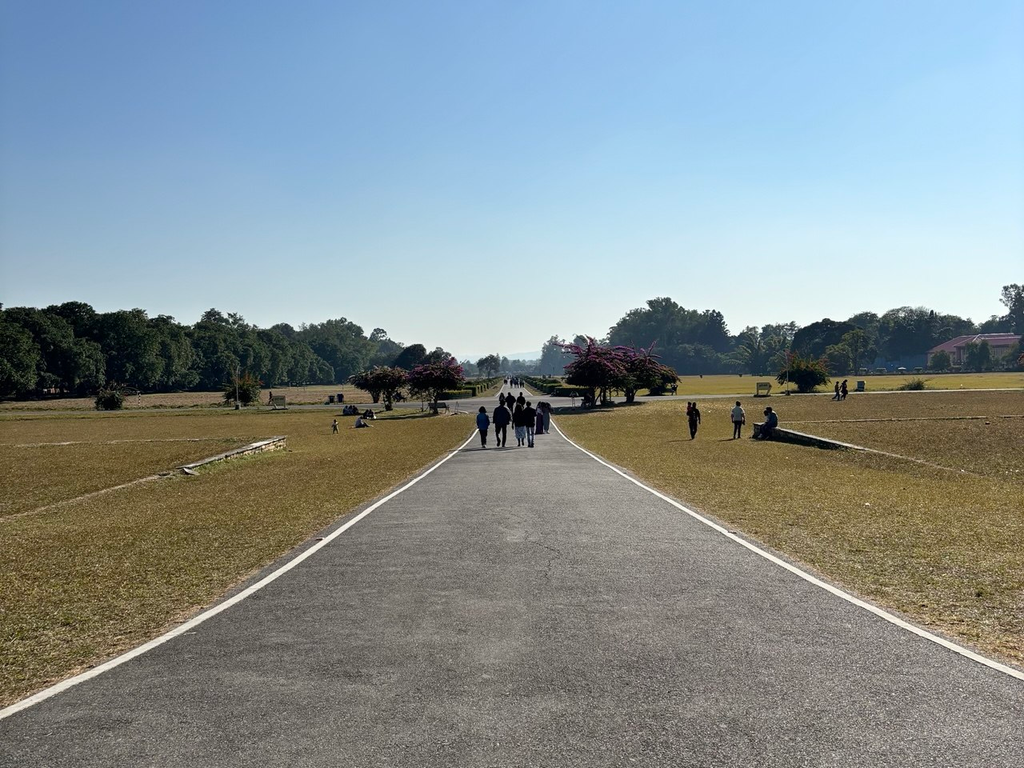
Recently, while strolling through a park, seeing various people of varied ages lost in their world, a thought struck me. Why are children so active, swinging, running, and climbing – like ground climbers? In contrast, elders are slowly treading on fixed paths made for walking. Some are lost in their thoughts; others are busy talking, though a sense of aloofness is clearly visible on their face. Even while talking, no sense of excitement or engrossment is there. This does not portray the whole picture, but it is still the larger reality. It felt quite intriguing as to why there is this stark difference in outlook towards life between these two larger groups of different ages. Is it just the level of energy or something more significant and potent that decides this differing behaviour?
As we grow, we go on accumulating various elements from our environment, which eventually build us. This is not only true for physiological development but also for our entire personality. The way we look, think, and behave is all the accumulated fodder we have consumed throughout our lives. The lesser the consumption, the lighter the outlook towards life. As we go on experiencing more and more of life, the burden of these memories continues to slow us down. It can be considered a bag that has been hoarded over a period of time.
The more intensely we feel and experience, the more memories we accumulate. We have many deep emotions we pass and carry through various phases of our life. As we grow, we face many good and bad events, each with its own impact on us. Some impressions easily fade from active memory; some are difficult to forget.
Research like that of Boston College and the University of North Carolina shows that it is harder to forget even mild negative events in comparison to good events. Our brain is wired with a negativity bias, which may be a survival instinct imperative for our ancestors living in jungles in constant fear for life from wild beasts. But this setup has made it difficult for us to move on from negative experiences.
Though we all came empty-handed and will leave in the same way, during our journey here we develop various connections, some of which are too treasured to imagine life without. Still, we are supposed to live after the tragic loss of such dear ones. These tragedies leave an enduring mark on our brains. The weight of such losses and emotions like fear, guilt and regret arising out of such events are quite heavy, and they suppress us under their consistent burden. Deeply felt emotions leave deeper impressions and are heavier to carry.
Now, I would like to focus on a different form of experience that we gain without actually being involved in it. It is the form of content we consume. Content consumption may have a similar impact on our memories as we have while physically being involved in an event. The memory generated through vivid involvement in consumption leaves the same amount of trace and impression on our brain as in the case of an actual incident.
One of the most intensive forms of content consumption is through books. We are provided with a sketch of characters and events. It is the reader who fills the characters with all the colours and brings them to life. This process turns the reader into an active participant in the story. They may start to mentally live with their desired characters. As they spend more time with the book, they become increasingly emotionally involved with the characters. With them, they accumulate distinct memories that leave permanent impressions on their subconscious mind. Inadvertently, they continue to carry this baggage too.
As they say, a brain once stretched cannot be brought back to its original shape. This is what learning does to our brain. That is why, even if we’d like to, we cannot erase the impressions gathered through learning and start a new beginning with a clear slate.
Such behaviour makes it very difficult for avid readers to have a simple and plain outlook on the issues at hand. They create a convoluted mess of images from the various related impressions they have, which leads to an over-analysed reaction. This process makes them seem slow and somewhat sombre.
The most tragic loss that happens when we start to understand a little too deeply is the feeling of awe. We stop getting surprised. This is because we have already had glimpses of some of the greatest tragedies and highest achievements. This makes us somewhat lukewarm in our reactions.
After all these discussions, one might feel ignorance is bliss indeed. It may give the impression that being experienced is not such a satisfying and rewarding position. This feeling is not totally unfounded. If we halt midway and analyse the situation, it is plausible to reach such a pessimistic conclusion.
But there is a bright side to it. As we go on exploring further and further, losing all sense of excitement and appreciation, we gradually start understanding a little bit of life. Though we may fail to make any sense out of it, we become humbled and guileless. We start to become children again. Gradually, our simplicity and innocence are regained. It seems paradoxical, but that is reality. If someone honestly explores this knowledge, they will eventually come to a clear realisation of their insignificance in the vastness of the cosmos and its functioning, and nothing remains except to kneel in utmost gratitude and humility. Perhaps that is what they call: Self-realisation. The confused and lost state is temporary. As one continues on the path of knowledge, they return as a child, completing the circle. As Christ claimed, only children will get entry into Heaven. Maybe he was talking about this child, the one who has returned to a state of innocence after adulthood.
It won’t be erroneous to appeal to everyone to become a child again. That way we may move beyond the burden of memories and regain our playfulness, liveliness and the sense of awe.